Goal 9 Industry, Innovation and Infrastructure
Build resilient infrastructure, promote inclusive and sustainable industrialization, and foster innovation: what Universitas Diponegoro is doing in pursuit of this goal.
Student & Internal Support Facilities
Explore UNDIP SDGs Impact!
Relationships to Support the Goals
Relationship with NGOs and Government for SDG Policy
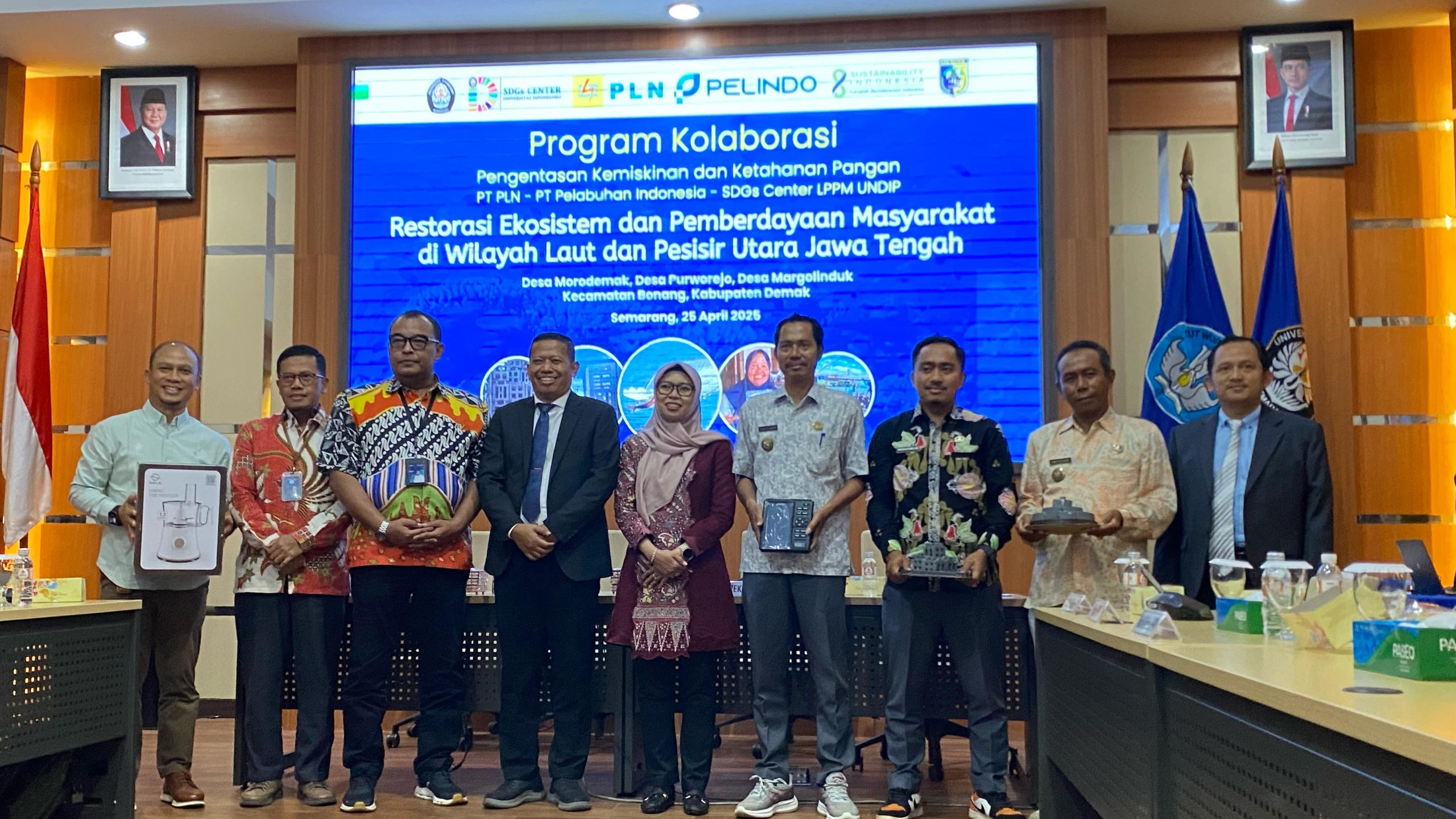
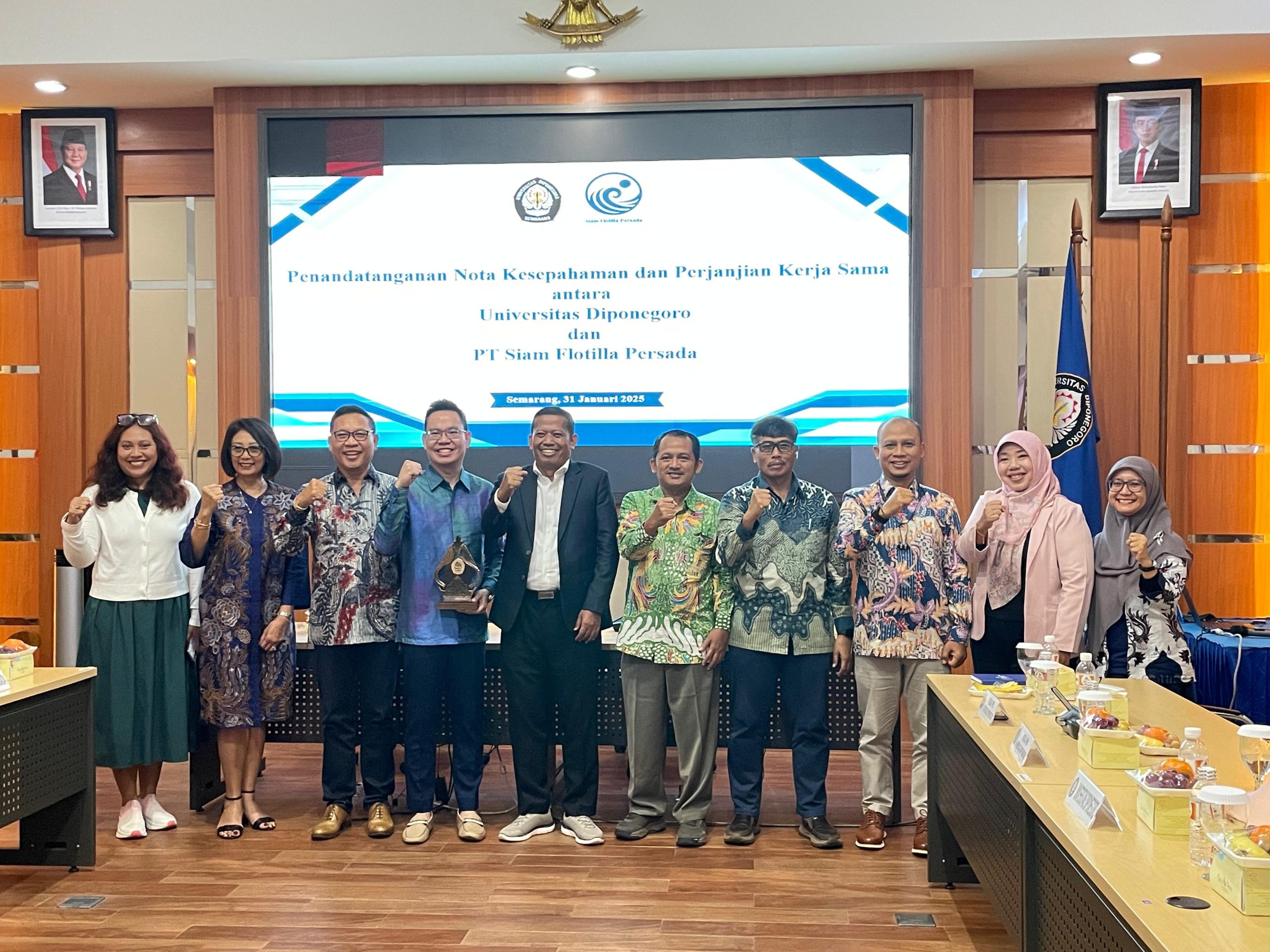
During 2024–2025, Universitas Diponegoro (UNDIP) has built strong collaborations with government institutions and NGOs to shape and implement policies supporting the Sustainable Development Goals. Working closely with Bappenas, the Provincial Government of Central Java, and several local governments, UNDIP contributes research, data, and technical expertise to the preparation of the Rencana Aksi Nasional SDGs 2025–2030 and regional low-carbon development strategies. Together with Yayasan Bintari, UNDIP participated in the Circular Economy Forum Jawa Tengah 2024 to promote waste reduction and recycling initiatives. In partnership with Mercy Corps Indonesia and Bappeda, UNDIP also developed flood risk reduction and coastal resilience strategies for the northern coast of Central Java. Through these ongoing collaborations, UNDIP helps identify key challenges, design adaptive policies, and ensure that regional development remains inclusive, evidence-based, and aligned with national SDG targets.
Cross Sectoral Dialogue about SDGs
In 2024, Universitas Diponegoro (UNDIP) actively led and participated in cross-sectoral dialogues that connect government, academia, and industry to advance the Sustainable Development Goals. These dialogues serve as vital platforms for sharing knowledge, aligning policies, and building joint solutions to national sustainability challenges. In partnership with the Ministry of Environment and Forestry (KLHK), UNDIP held a national workshop on carbon governance and youth engagement in climate action. With the Ministry of Transportation (Kemenhub), UNDIP’s Faculty of Social and Political Sciences hosted a national seminar on sustainable urban transport systems. The Faculty of Engineering, with ERIC UGM and MKI, discussed Indonesia’s energy transition toward Net Zero 2060, while the Faculty of Public Health convened an international conference on climate and health. Through these multi-stakeholder initiatives, UNDIP demonstrates the importance of collaboration as a foundation for effective and inclusive SDG implementation.
- https://ft.undip.ac.id/undip-dan-klhk-gelar-lokakarya-untuk-bangun-kesadaran-pemuda-dalam-mengelola-emisi-karbon-dan-menghadapi-perubahan-iklim/
- https://undip.ac.id/post/37220/fkm-undip-gelar-international-conference-bahas-tantangan-multidimensi-dampak-perubahan-iklim.html
- https://undip.ac.id/post/39274/fisip-undip-dan-kemenhub-hadirkan-seminar-nasional-mengkaji-sistem-transportasi-berbasis-angkutan-umum-massal.html
- https://undip.ac.id/post/31259/dukung-indonesia-net-zero-emission-2060-ft-undip-bekerjasama-eric-ugm-dan-mki-gelar-seminar-nasional-bertajuk-transisi-energi.html
- https://undip.ac.id/post/30671/fh-undip-selenggarakan-seminar-internasional-maritime-delimitation-recent-development-and-relevant-factors.html
International Collaboration Data for SDGs
In 2024, Universitas Diponegoro (UNDIP) strengthened its international role in SDG data collaboration through several strategic initiatives. Together with Woxsen University (India), UNDIP’s UNESCO-affiliated SDGs Center launched the South–South SDG Data Observatory to collect, compare, and visualize sustainability data from Asian higher education institutions, focusing on SDG 4, 7, 9, and 13. UNDIP also collaborated with Griffith University (Australia) on research connecting climate change, land subsidence, and forced labour, generating cross-country datasets relevant to SDG 5, 8, and 13. In partnership with the Australian Nuclear Science and Technology Organisation (ANSTO), UNDIP co-organized workshops and studies on climate action and water management, contributing environmental data for SDG 6 and 13. These collaborations demonstrate UNDIP’s commitment to producing and sharing high-quality international data that supports evidence-based SDG implementation.
- https://woxsen.edu.in/pdf/mandatory%20disclosure-sdg/23_international%20collaboration%20for%20sdg%20data,%20comparative%20research,%20and%20development%20of%20global%20best%20practices.pdf
- https://www.griffith.edu.au/research/disrupting-violence/forced-labour-and-climate-change-keeping-a-focus-on-women-and-children
- https://sustainability.undip.ac.id/2019/11/27/17-participation-in-international-collaboration-on-gathering-or-measuring-data-for-the-sdgs/#:~:text=The%20agreement%20was%20signed%20on,%2Dpenelitian%2Dbersama/
Collaboration with NGOs for SDGs
In 2024, Universitas Diponegoro (UNDIP) strengthened collaborations with NGOs to advance the SDGs through student volunteering, research, and educational resource development. Student volunteers joined environmental NGOs in World Clean Up Day 2024 and community-based education programs during the KKN service projects, promoting climate awareness, waste reduction, and local entrepreneurship. Research collaborations in the Faculty of Social and Political Sciences involved NGOs and local communities in projects on circular economy, inclusion, and environmental governance. Students also co-developed learning modules such as disability-inclusive environmental action and household organic waste management for circular economy training. These partnerships integrate civic action, research, and education, demonstrating UNDIP’s commitment to inclusive, community-driven SDG implementation.
- https://uptk3l.undip.ac.id/2024/08/18/volunteer-greendips-scholarship-di-pkkmb-dan-pendikar-2024/
- https://english.fib.undip.ac.id/en/undips-community-service-program-introduce-the-importance-of-english-learning-for-high-school-students-future-careers/
- https://undip.ac.id/language/en/post/42088/undip-community-service-students-realize-sdgs-through-collaboration-and-innovation-at-exhibition-in-sukoharjo-regency.html?utm
Collaboration for SDGs Best Practices
In 2024, Universitas Diponegoro (UNDIP) advanced international SDG best practice through its collaboration in the Voluntary Local Review (VLR) Kendal Regency 2024, developed jointly with UCLG ASPAC, Tanoto Foundation, and the Kendal Regency Government. As the academic lead, UNDIP’s SDGs Center guided the methodology, data analysis, and stakeholder engagement process—ensuring the VLR followed UNESCAP and UN-DESA standards for SDG reporting and comparability. The collaboration exemplifies UNDIP’s leadership in aligning local SDG monitoring with global frameworks while promoting participatory, evidence-based regional policy. The VLR’s outcomes—covering climate action, education, health, and gender equality—now serve as a model of international best practice for localizing SDGs and fostering adaptive policy learning across Asia-Pacific cities.
Publication of SDGs Reports
Publication of SDG reports
Universitas Diponegoro (Undip) has established a strategic policy to ensure the conservation, restoration, and sustainable use of terrestrial ecosystems, particularly forests, mountains, and drylands associated with the university and its surrounding areas. This policy aims to preserve biodiversity and maintain ecosystem integrity to support long-term ecological and social functions. Through collaborative efforts among faculties, natural resource units, and local communities, Undip promotes the restoration of degraded areas, protection of natural habitats, and environmental education for its academic community. This initiative strengthens the university’s commitment to sustainability and responsible stewardship of natural resources.
Education for the SDGs
Education for SDGs Specific Courses on Sustainability
Universitas Diponegoro (UNDIP) offers dedicated courses specifically focused on sustainability and the Sustainable Development Goals (SDGs), designed to develop deeply competent graduates. Across its 13 faculties, the university integrates sustainability into 142 study programs and ensures more than 9,700 out of 9,848 total courses relate to environment or social sustainability—meaning over 98% of its curriculum reflects SDG relevance. Notably, the Department of Urban and Regional Planning offers a joint teaching-research course titled "Climate Change and Planning: Critical Pedagogies from Coastal Delta Cities of Asia", equipping students with interdisciplinary tools to tackle climate and coastal issues in Asian contexts. Additionally, UNDIP signed an agreement with Victoria University of Wellington (New Zealand) to launch a double-degree Master of Climate Change Science and Policy, enabling students to access international expertise and research collaborations. These courses—ranging from stand-alone sustainability modules to full postgraduate pathways—emphasize active learning, real-world applications, and policy-oriented outcomes, confirming UNDIP's commitment to turn sustainability from elective content into core academic programs.
- https://undip.ac.id/language/en/post/36697/undip-visit-to-victoria-university-of-wellington-new-zealand-and-conduct-agreement-on-the-double-degree-program-master-of-climate-change-science-and-policy.html
- https://pwk.ft.undip.ac.id/id/joint-teaching-research-course-climate-change-and-planning-critical-pedagogies-from-coastal-delta-cities-of-asias/
Education for SDGs in the Wider Community
Universitas Diponegoro (UNDIP) extends sustainability and SDG education beyond the classroom through a range of dedicated outreach programs for the wider community, alumni, and vulnerable groups. Through the SDGs Center UNDIP and the School of Sustainability, the university conducts workshops, short courses, and community empowerment projects focused on climate adaptation, waste management, renewable energy, and sustainable livelihoods. The KKN Tematik on SDGs mobilizes thousands of students annually to work directly with rural and coastal communities, integrating local wisdom with SDG practices in agriculture, fisheries, and mangrove restoration. Alumni actively participate in the UNDIP Alumni Network for Sustainability, mentoring students and supporting green entrepreneurship initiatives. UNDIP also provides inclusive learning opportunities for displaced or marginalized groups through eco-education and skill-based training in collaboration with local governments and NGOs. These activities ensure that sustainability knowledge is shared widely, transforming communities into active partners in achieving the SDGs.
- https://sustainability.undip.ac.id/2022/08/30/sdgs-center-undip-ikatan-alumni-planologi-undip-bergerak-bersama-dalam-aksi-sosila-bersih-sungai-samban/
- https://undip.ac.id/post/39188/ikateka-undip-bersama-bkkpii-membahas-implementasi-industri-hijau-dan-upaya-net-zero-emission-tahun-2050.html
- https://feb.undip.ac.id/go-cashless-mahasiswa-kkn-tim-ii-undip-gencarkan-sosialisasi-dan-pendampingan-qris-bagi-umkm-desa-kendel-boyolali/
Education for SDGs Commitment Meaningful Education
The integration of sustainability in Universitas Diponegoro's (UNDIP) education system is formally mandated through the Rector's Circular Letter on the Implementation of the Sustainable Development Goals (SDGs) No. /UN7.P/SE/2020. This directive requires that all study programs embed SDG-related materials into their curriculum, research, and community service. Each faculty appoints an SDG focal point responsible for planning, implementation, and continuous monitoring.
Sustainability has been deeply embedded across all levels of education at UNDIP. Out of 9,848 total courses offered, 9,722 (98.72%) incorporate sustainability-related themes such as climate action, renewable energy, circular economy, marine protection, and social inclusion.
Total Number of Subject at Universitas Diponegoro:
| No | Faculty | General | Sustainable | Total | % Sustain Per Faculty |
|---|---|---|---|---|---|
| 1 | FT (Engineering) | 21 | 2,018 | 2,039 | 99.0% |
| 2 | FSM (Science & Mathematics) | 11 | 1,031 | 1,042 | 98.9% |
| 3 | FPIK (Fisheries & Marine Science) | 13 | 735 | 748 | 98.3% |
| 4 | FPP (Animal & Agricultural Sciences) | 8 | 835 | 843 | 99.1% |
| 5 | FIB (Humanities) | 11 | 631 | 642 | 98.3% |
| 6 | FISIP (Social & Political Sciences) | 12 | 654 | 666 | 98.2% |
| 7 | FEB (Economics & Business) | 10 | 577 | 587 | 98.3% |
| 8 | FH (Law) | 2 | 314 | 316 | 99.4% |
| 9 | FKM (Public Health) | 4 | 399 | 403 | 99.0% |
| 10 | FK (Medicine) | 10 | 1,356 | 1,366 | 99.3% |
| 11 | FPSI (Psychology) | 2 | 127 | 129 | 98.4% |
| 12 | Vokasi (Vocational School) | 22 | 851 | 873 | 97.5% |
| 13 | Pasca (Graduate School) | 0 | 194 | 194 | 100.0% |
| Total | 126 | 9,722 | 9,848 | 98.72% | |
Publications