Goal 13 Climate Action

Take urgent action to combat climate change and its impacts: what Universitas Diponegoro is doing in pursuit of this goal.

Student & Internal Support Facilities

Low Carbon Energy Tracking

Water Consumption per Person

Low Carbon Energy Tracking

Universitas Diponegoro (UNDIP) has advanced its low‑carbon energy tracking by conducting a comprehensive energy audit in 2024 across the Tembalang campus. The Laporan Akhir Audit Energi UNDIP 2024 evaluates electricity and thermal energy flows to support efficient campus operations. Complementing the audit, UNDIP’s Sustainability Report 2024‑2025 outlines the university’s measurement of renewable energy consumption lessons partly drawn from campus‑wide and partial subsystem tracking. Through these efforts, UNDIP reinforces its commitment to monitor and reduce carbon‑intensive energy use and progress toward a low‑carbon campus environment.

Proportion of Recycled Waste

Waste Water Treatment

Local Education Programs on Climate

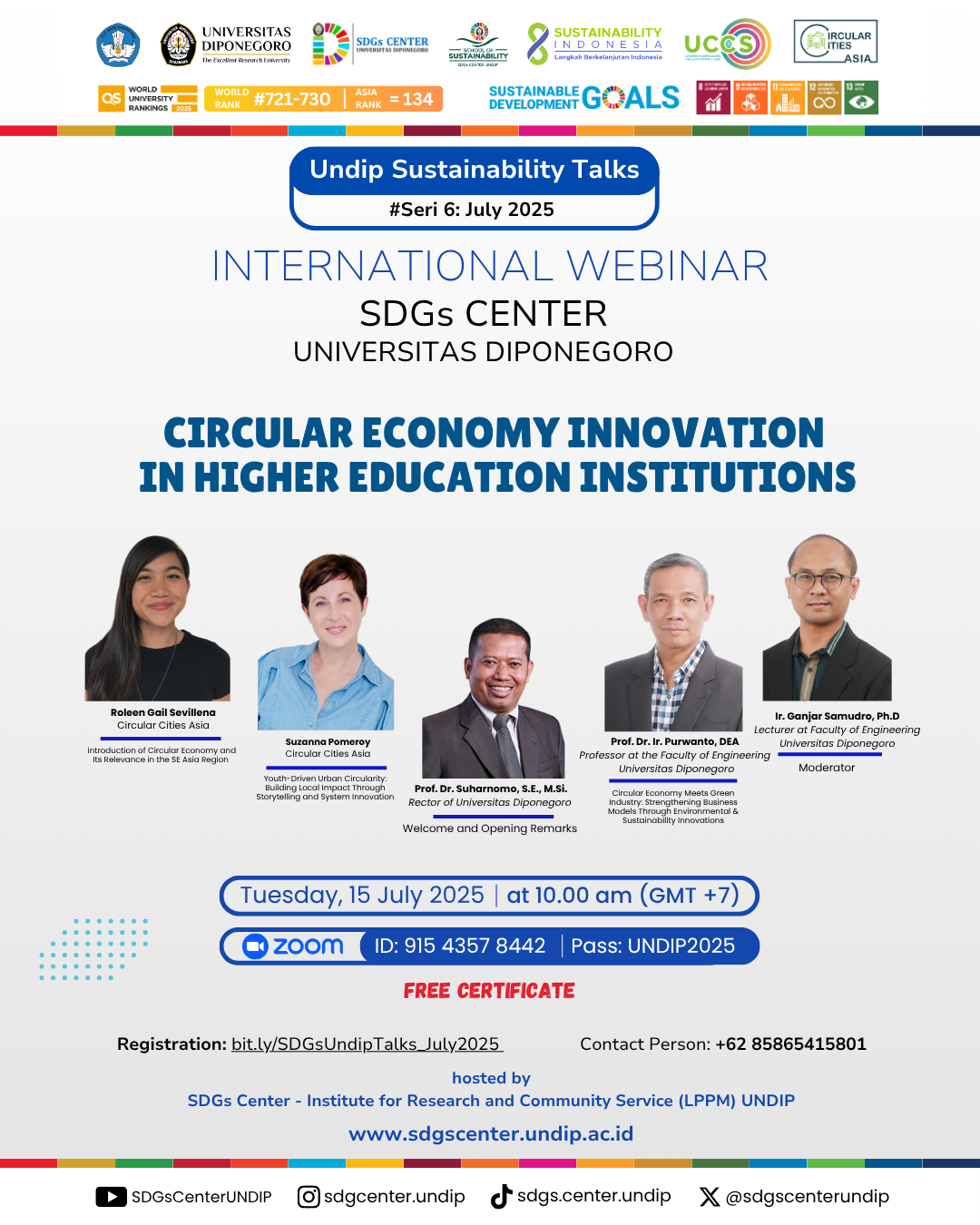
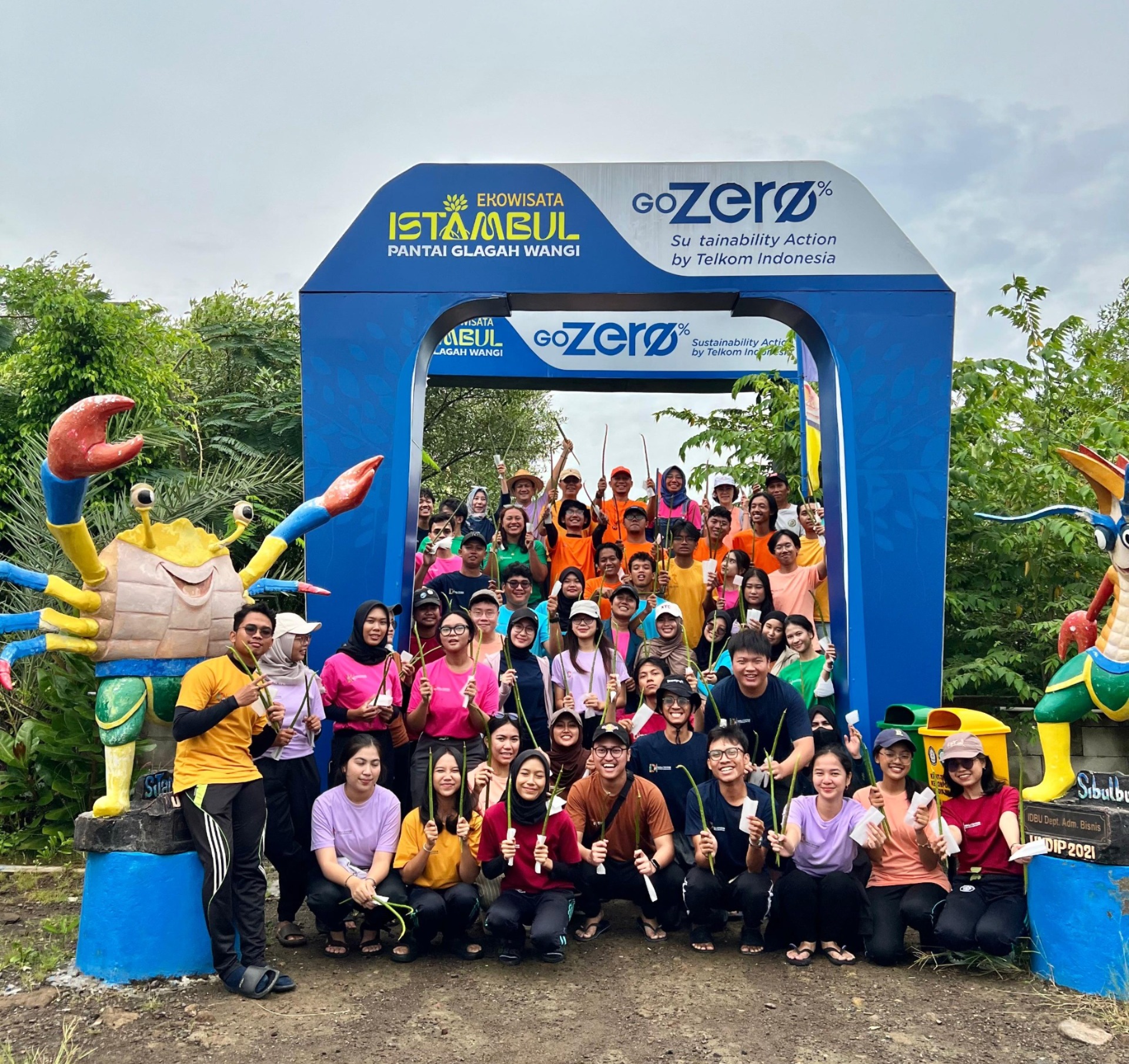
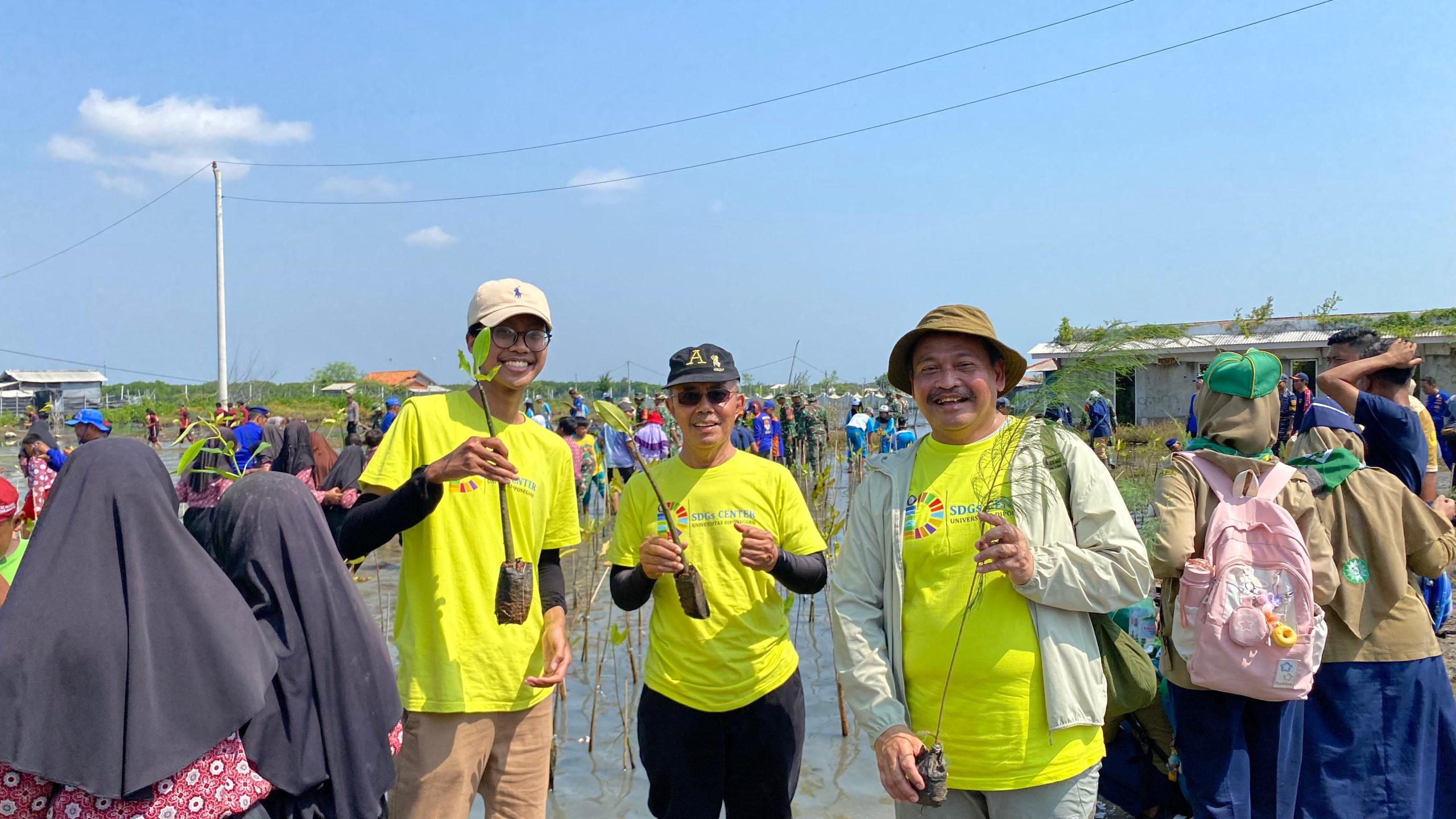
In 2024, Universitas Diponegoro (UNDIP), through its SDGs Center and in collaboration with the Tanoto Scholar Association (TSA), organized a series of local education programmes and campaigns focused on climate change risks, impacts, mitigation, adaptation, and early warning systems. These activities were part of UNDIP’s annual Goal 13: Climate Action Program 2024, which aims to strengthen awareness and local capacity to address the challenges of climate change. The programmes included the Inspirasi SDGs video series with TSA, featuring discussions on net-zero emissions, renewable energy transition, and sustainable industry practices, as well as the KKN-Tematik SDGs community service programme, where students worked directly with communities to implement climate resilience projects such as mangrove rehabilitation, waste-to-resource initiatives, and clean energy demonstrations. Through this collaboration, UNDIP and TSA actively integrated academic learning, youth leadership, and community-based innovation to promote a culture of sustainability and climate awareness at the local level, supporting Indonesia’s commitment to achieve net-zero emissions by 2060.

Waste Water Treatment

Climate Action Plan, Shared

Universitas Diponegoro (UNDIP) has a comprehensive Climate Action Plan that is openly shared with local government and community groups. The Climate Change Mitigation and Adaptation Action Plan 2024 and Carbon Reduction Roadmap 2050 outline UNDIP’s strategy to cut emissions and enhance climate resilience across energy, transport, water, and waste systems. Both documents are publicly available and have been formally shared with the City of Semarang, the Central Java Provincial Government, and the Ministry of Environment and Forestry (KLHK). Through joint programs, youth workshops, and community engagement, UNDIP works with local stakeholders to raise awareness and co-implement carbon management actions. This shared plan strengthens regional collaboration and ensures UNDIP’s climate action extends beyond the campus, supporting local and national efforts toward low-carbon, climate-resilient development.

Waste Water Treatment

Co-Operative Planning for Climate Change Disasters

In 2024, Universitas Diponegoro (UNDIP) actively participated in co-operative planning for climate change disasters through partnerships with government and international organizations. In collaboration with Indonesia’s National Disaster Management Agency (BNPB) and the local government of Jepara, UNDIP deployed a mobile desalination unit to provide clean water during coastal floods in Demak and Jepara, supporting emergency response and community resilience. Together with Mercy Corps Indonesia, UNDIP developed risk-based spatial planning and community-driven strategies to address increasing tidal flooding along Central Java’s northern coast. The university also hosted multi-stakeholder forums involving local governments, including Jepara and Demak, NGOs, and vulnerable coastal communities to align disaster risk reduction with social inclusion. Internationally, UNDIP engaged in the Asian-African Student Conference on “Climate Justice and Sustainability,” promoting Global South cooperation on displacement, adaptation, and resilience. These actions reflect UNDIP’s integrated, collaborative approach to climate disaster planning and human mobility challenges.

Waste Water Treatment

Inform and Support Government

In 2024, Universitas Diponegoro (UNDIP) strengthened its role in informing and supporting local and regional governments across Central Java in climate change disaster risk early warning and monitoring. Through collaborations with the Regional Disaster Management Agency (BPBD), the Ministry of Agrarian and Spatial Planning, and local governments such as Jepara, Demak, Tegal, and Pati, UNDIP provided research-based innovations, spatial data, and policy inputs to enhance disaster governance. The Geomatics and Planning Laboratory developed a digital disaster information system for Tegal Regency to improve data-driven decision-making. UNDIP researchers contributed to Smart Disaster Governance in Pati Regency, integrating geospatial analysis, community participation, and multi-stakeholder coordination for flood mitigation. Additionally, UNDIP’s SDGs Center and KKN-Tematik SDGs students initiated disaster-resilient villages, empowering communities through training in early warning, preparedness, and adaptive planning. These actions demonstrate UNDIP’s leadership as a scientific and policy partner in strengthening regional resilience to climate-related disasters.

Waste Water Treatment

Environmental Education Collaborates NGO

Universitas Diponegoro (UNDIP) collaborates with several NGOs to strengthen environmental education and climate adaptation. In 2024, FISIP UNDIP worked with the Penabulu Foundation to design learning programs on natural resource management and climate justice, including “Adaptasi Goes to Campus” talk shows and interactive games for students. The Department of Urban and Regional Planning partners with IUCCE and PATTIRO Semarang on the Koneksi project, integrating climate resilience into academic and community learning. The Agribusiness Department collaborates with SERABUT NGO on educational research for sustainable agriculture and climate change adaptation. UNDIP also developed the SDGs Park, a sustainability learning center integrated with a mangrove ecosystem managed by the NGO Kesemat. The initiative, known as the Taman Mini SDGs at the Marine Science Techno Park Jepara, serves as a green economy learning space and eco-education site that combines mangrove restoration, community tourism, and sustainability education. Through initiatives and forums like INCRID 2024, UNDIP promotes knowledge-sharing and partnerships to advance climate education and resilience.

Waste Water Treatment

Commitment to Carbon Neutral Universities

Universitas Diponegoro (UNDIP) has affirmed its commitment to become a carbon‑neutral university by 2050, as outlined in its “Roadmap Towards Net Zero Emission 2050”. The roadmap details emissions‑reduction programs covering Scope 1 and 2 (direct and purchased energy use) and builds toward addressing Scope 3 (indirect emissions) through full lifecycle and value‑chain actions. Key targets include raising renewable energy use to 80% and increasing carbon stocks by 5.5% by 2050. Undip’s strategy reflects full alignment with the Greenhouse Gas Protocol framework for emission scopes and shows institutional resolve toward deep decarbonisation.

Publications

en_USEnglish