Goal 16 Peace, Justice and Strong Institutions

Promote peaceful and inclusive societies, provide access to justice for all, and build effective, accountable institutions: what Universitas Diponegoro is doing in pursuit of this goal.

Student & Internal Support Facilities

University Governance Measures

Water Consumption per Person

Elected Representation

The Board of Trustees (MWA) consists of 17 members with following elements: the Minister; the Governor of Central Java Province; the Chair of the Academic Senate; three representatives from the public; one representative from UNDIP alumni; three UNDIP lecturers who are not professors; one education staff member; and one student representative. The requirements for MWA members must be Indonesian citizens, have faith in and devotion to God Almighty, be physically and mentally healthy, have the capacity and commitment to develop and maintain the sustainability of UNDIP, possess a reputation in the academic, cultural, or societal spheres, or have the ability to develop UNDIP’s resources, have the ability to build synergistic relations between UNDIP and the society, and also not be affiliated with a political party (except for regional heads and/or the Minister). This composition and requirement of MWA member accomodate the needs of representation of any level in UNDIP civitas academica.

Water Consumption per Person

Student's Union

On 5 March 2024, the Faculty of Medicine of Universitas Diponegoro held the inauguration and handover ceremony for the 2024 student organizations of FK UNDIP. During the event, the 2024 President of the Student Executive Board (BEM) of FK UNDIP, Ayuba, called on all student functionaries to demonstrate their performance and to dispel negative stigma toward the younger generation. This inauguration signified that the student organization management is officially recognized by the faculty and is mandated to implement student programs in 2024. The faculty also conveyed its hopes that the student organization leaders will carry out their duties and responsibilities for the advancement of students and the campus environment.

On Wednesday, 15 May 2024, the Student Executive Board (BEM) of Universitas Diponegoro organized an event titled “Duduk Bareng Rektor: Jaring Aspirasi Mahasiswa” at the FPIK Auditorium. The event featured the Rector of UNDIP, Prof. Suharnomo, along with the university leadership, to directly receive students’ aspirations. In this forum, BEM UNDIP facilitated the delivery of students’ ideas, questions, and feedback regarding the implementation of education and campus facilities. At the end of the event, the Rector responded to the inputs conveyed by the students.

The Student Senate of the Faculty of Humanities (FIB) of UNDIP held an activity called “Lingkar Aspirasi.” This activity was part of the Student Senate’s work program and aimed to gather students’ aspirations related to needs, academic matters, and facilities within the faculty. Students were provided with a space to express challenges and suggestions for improvement, while the senate board documented the inputs to be followed up with the faculty. It was conveyed that this activity is expected to strengthen communication between students and study program management so that services for students can be improved.

On 15–20 July 2024, Universitas Diponegoro reported the implementation of the 17th National Working Meeting of the All-Indonesia Student Executive Boards (BEM SI), which was held at UNDIP. The opening ceremony took place at the Prof. Soedarto, SH Building and was attended by the Rector of UNDIP, vice rectors, deans, directors, and the President of BEM UNDIP. This national meeting aimed to promote student synergy and inclusive democracy through a series of joint agendas involving student organizations from various universities.

Water Consumption per Person

Identify and Engage with Local Stakeholder

Diponegoro University has policies and procedures engaging with local external stakeholders especially under community development program. This policy is rooted in Government Regulation Number 30 of 2014, specifically in Article 77, and derived in Guideline for Community Services of Diponegoro University (Edition X, 2024). The guideline is to govern collaborations with local society and other entities. According to higher education’s Three Pillars, the Research and Community Service Body of Universitas Diponegoro has crafted a comprehensive guidebook for executing community service initiatives, including specific regulations for collaboration with stakeholders. The need for collaboration is also mandated by Undip strategic plan (2024-2029).

Water Consumption per Person

Participatory Bodies for Stakeholder Engagement

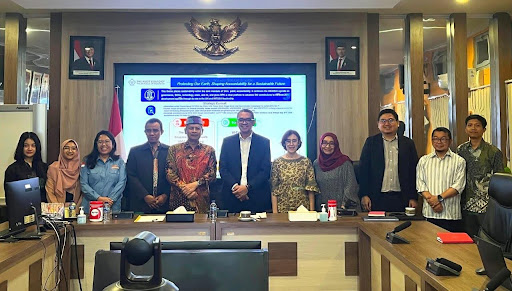
On 6 September 2024, the Department of Urban and Regional Planning (PWK) of the Faculty of Engineering, Universitas Diponegoro, organized a Stakeholders Forum that brought together the National Research and Innovation Agency (BRIN), an international partner (Griffith University), the Central Java Regional House of Representatives (DPRD), as well as provincial and regency/municipal governments in Central Java to discuss research collaboration on labor migration and climate change with a focus on vulnerable groups. Universitas Diponegoro provided a platform for dialogue involving local stakeholders, government, and international partners so that they could contribute inputs to the university’s research and community engagement agenda.

Water Consumption per Person

University Principles on Corruption and Bribery

On 11 October 2024, UNDIP publicly declared its commitment to preventing corruption and gratuities within the university environment at the press conference for its 67th Dies Natalis. The Rector emphasized that the anti-gratuity commitment is an implementation of the oath of office and part of efforts to realize good university governance. UNDIP was among six universities that in 2024 received assistance from the Corruption Eradication Commission (KPK) for integrity strengthening. The university published its principles and commitment to the prevention of corruption, bribery, and gratuities.

Water Consumption per Person

Academic Freedom Policy

The Academic Senate of Universitas Diponegoro established the “Academic Policy” as a guideline for the implementation of the Three Pilars of Higher Education (Tri Dharma Perguruan Tinggi) and academic quality assurance at the university. The policy affirms the academic authority of the senate and lecturers in carrying out education and research in accordance with Universitas Diponegoro’s standards.

Water Consumption per Person

Publish Financial Data

Universitas Diponegoro publishes its financial statements and the Work Plan and Budget (RKAT) through the PPID webpage, which is publicly accessible. The page provides the 2024 financial statements as well as the consolidated financial statements of the PTNBH, demonstrating a commitment to transparency and accountability in financial management. This publication meets the indicator of “publish university financial data” because financial performance data are presented openly and in a structured manner, and can be downloaded by stakeholders.

Environmental Education Measures

Waste Water Treatment

Provide Expeert Advice to Government

Universitas Diponegoro (Undip) has established a strategic policy to ensure the conservation, restoration, and sustainable use of terrestrial ecosystems, particularly forests, mountains, and drylands associated with the university and its surrounding areas. This policy aims to preserve biodiversity and maintain ecosystem integrity to support long-term ecological and social functions. Through collaborative efforts among faculties, natural resource units, and local communities, Undip promotes the restoration of degraded areas, protection of natural habitats, and environmental education for its academic community. This initiative strengthens the university’s commitment to sustainability and responsible stewardship of natural resources.

Waste Water Treatment

Policy and Law Makers Outreach and Education

The university has established a formal policy to identify, monitor, and protect species listed on the International Union for Conservation of Nature (IUCN) Red List and the national conservation list, particularly those inhabiting areas affected by campus operations. This policy includes habitat monitoring, species recording, and mitigation measures to minimize ecological disturbances. Through these efforts, the university demonstrates its strong commitment to preserving biodiversity while conducting academic and operational activities. This initiative reflects the institution’s dedication to environmental sustainability and the protection of endangered and vulnerable species.

Waste Water Treatment

Participation in Government Research

Universitas Diponegoro (UNDIP) is actively monitoring and conserving biodiversity on the Tembalang campus. Observations have shown a rapid increase in the number of flora species on campus since 2019, with more than 180 plant species from 45 families identified by 2024, including several protected species listed on the IUCN Red List.

Furthermore, 166 fauna species, including birds, butterflies, dragonflies, amphibians, fish, and mammals, have been recorded—a significant increase from 64 species in 2019. The diversity index indicates that the campus ecosystem is classified as high and stable.

Through these efforts, UNDIP is establishing its campus not only as a center for education and research, but also as a conservation area that supports biodiversity conservation and the implementation of sustainable development principles.

Waste Water Treatment

Neutral Platform to Discuss Issues

The university has introduced Universitas Diponegoro’s Circular No. 30/2022, specifically targeting the reduction of invasive alien species across campus landscapes. This directive mandates the identification, monitoring and timely removal of non-native flora and fauna that may disrupt local ecosystems. The policy outlines collaboration between campus sustainability teams and ecological experts to restore affected areas and implement preventive measures. Through this proactive stance, the university strengthens its commitment to protecting indigenous biodiversity, ensuring a healthier and more balanced environment for both academic and natural communities.

Publications

en_USEnglish