

Semarang, 15 September 2026 – The SDGs Center UNDIP, in strategic collaboration with the Faculty of Social and Political Sciences at Diponegoro University (FISIP UNDIP), has released Edition 64 of the FISIP UNDIP Channel. This special broadcast brings together academic experts to discuss regional development challenges, urban environmental sustainability, and public service digital transformation.
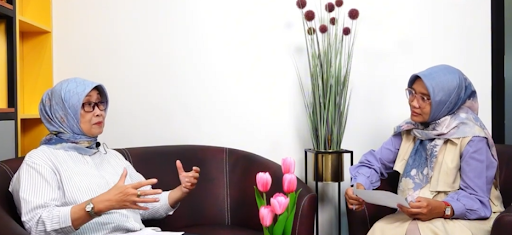
Hosted by Arika in the Kata Pakar FISIP UNDIP segment, the first featured discussion welcomed Dr. Sri Sumiati, an expert in environmental and waste management. The session examined the critical connection between waste management infrastructure and Sustainable Development Goal 11 (Sustainable Cities and Communities).
Dr. Sri Sumiati emphasized that urban waste management is a fundamental basic need, on par with clean water supply. She highlighted that effective waste management relies on source-sorting at the household level, ensuring that final disposal sites (TPA) process only residual waste.
Key strategies and insights discussed include:
- Promoting Public Ownership: Cultivating the core mindset of “My Waste, My Responsibility” (Sampahku, Tanggung Jawabku) to drive active individual participation.
- Technical and Financial Strategies: Adopting affordable, user-friendly, appropriate technologies and diversifying funding beyond regional budgets (APBD) through the Polluter Pays Principle (P3) and optimized retributions.
- Pentahelix Collaboration: Fostering multi-stakeholder partnerships involving Government, Academics, Private Sector, Communities, and Media.
- Community and Academic Engagement: Empowering local initiatives like Waste Banks (Bank Sampah) as community role models, alongside leveraging university higher education pillars (Tri Dharma Perguruan Tinggi) for education and research.

The broadcast concluded with a One Minute Insight segment presented by Dr. Dra. Agustin Rina Herawati, M.Si. from the Master of Public Administration Program. Dr. Agustin outlined how Digital Governance optimizes public services by cutting red tape, eliminating informal intermediaries, and fulfilling the principle of faster, better, and cheaper services. He highlighted four core pillars of digital governance: Transparency, Accountability, Public Participation, and Efficiency.
The episode wrapped up with a visual showcase of FISIP UNDIP’s modern campus facilities and an overview of the Department of Communication Science as a dynamic academic environment.