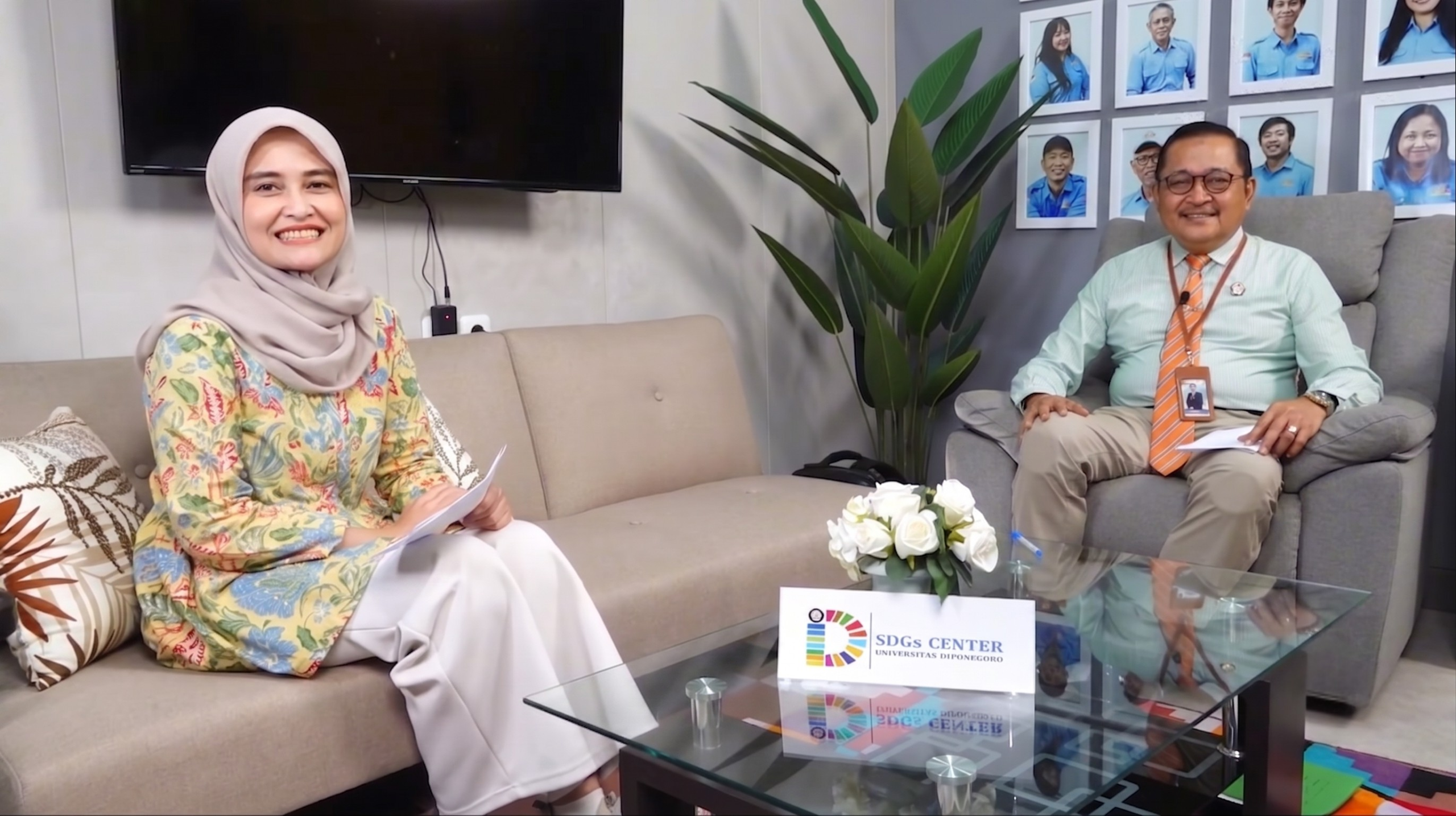


Semarang, 31 August 2026 – The Faculty of Social and Political Sciences at Diponegoro University (FISIP UNDIP), in strategic collaboration with the SDGs Center UNDIP, has released Edition 62 of the FISIP UNDIP Channel. Hosted by Muhammad Rif’at Al-Razi, S.I.Kom., M.I.Kom., this special broadcast brings together key academic experts to discuss crucial challenges surrounding regional development, poverty reduction, and urban environmental sustainability across Central Java.
The first major discussion, featured in the SDGs Talk segment, welcomed Prof. Firmansyah, S.E., M.Si., Ph.D. from the Faculty of Economics and Business to examine structural poverty within the framework of Sustainable Development Goal 1 (No Poverty). Prof. Firmansyah explained that structural poverty does not stem from personal inaction, but rather from systemic limitations that restrict access to education, decent employment, capital, and proper infrastructure. Because vulnerable populations such as smallholder farmers and informal urban workers lack financial buffers, external economic disruptions and environmental hazards hit them the hardest. Addressing these challenges requires systemic reforms that combine immediate social support with sustainable, long-term economic strategies.

In evaluating poverty reduction in Central Java, Prof. Firmansyah pointed out that regional development plans are moving in a positive direction by adopting green economy principles. However, he emphasized that government programs must rely on accurate, field-verified data organized by specific names and addresses to effectively reach different community groups, from coastal fishing villages to agricultural regions in Temanggung and Pemalang. He also highlighted the essential role of universities as research and development partners for local governments, noting that practical campus innovations can directly help communities increase productivity and build resilience against economic shocks.

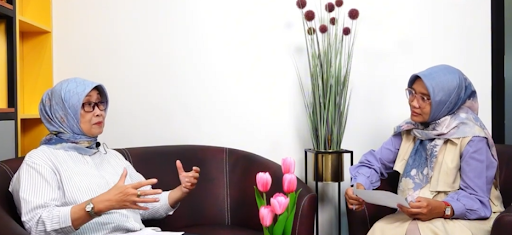
The program concluded with the One Minute Insight segment presented by Prof. Dr. Dra. Kismartini, M.Si. from the Public Administration Department, focusing on the urgent need for joint action between government authorities and citizens in managing urban water systems. Prof. Kismartini observed that when light rainfall causes significant urban flooding, it indicates that the natural environment’s carrying capacity has reached a critical limit due to extensive concrete construction. She highlighted that public administration policies require at least 30 percent of urban spaces to be maintained as green open areas, requiring active cooperation between public institutions, private entities, and local communities to protect absorption zones and prevent urban drainage failures.