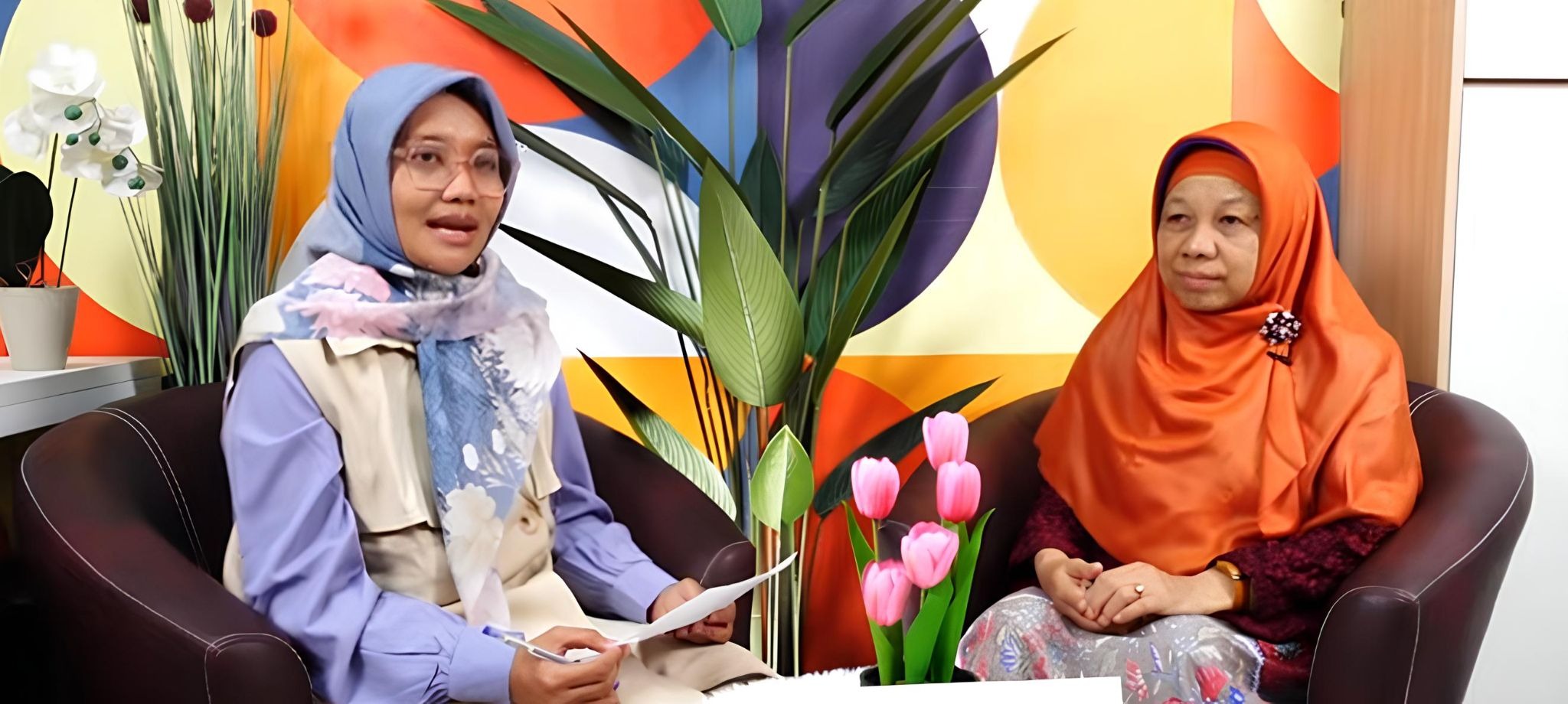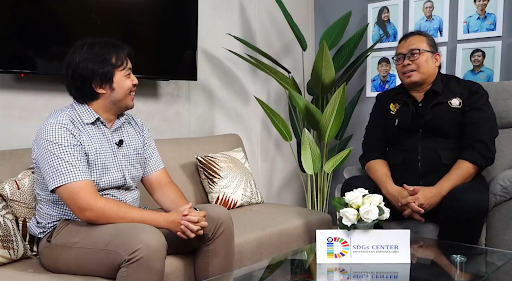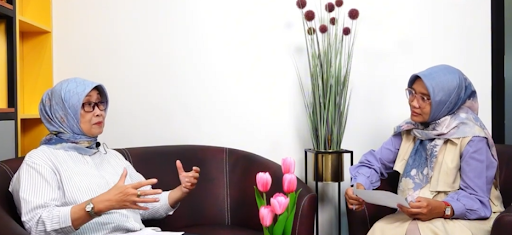

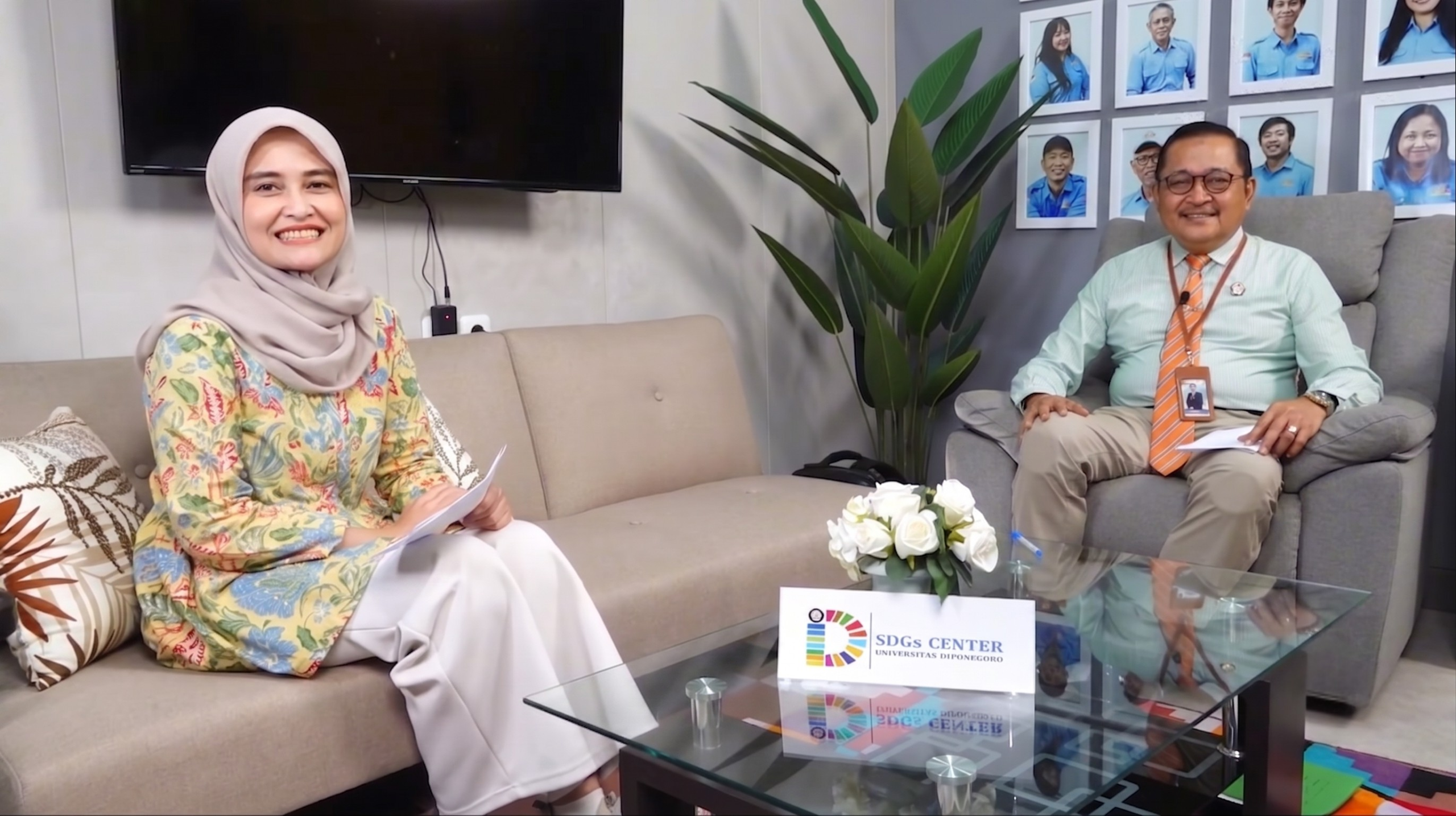
Semarang, 30 July 2026 — FISIP Undip Channel, in a program produced jointly by the SDGs Center of Universitas Diponegoro (Undip) and the Faculty of Social and Political Sciences (FISIP), aired a new episode of SDGs Talk featuring Prof. Dr. Ir. Sri Puryono K.S., M.P., discussing how an ecoregion approach can strengthen integrated coastal governance and accelerate SDGs achievement in Central Java. The episode, titled “Ecoregion Approach: Integrated Coastal Governance and SDGs Achievement in Central Java,” was hosted by Hanifa Mahila.
Prof. Sri Puryono, a professor at Undip and former senior official in the Central Java provincial government who now heads the university’s Special-Purpose Forest Area (KHDTK) management office, opened by explaining that an ecoregion approach requires governments to manage the environment and natural resources sustainably across ecological rather than administrative boundaries. According to him, the boundary that matters most is not a district or provincial line, but the watershed upstream and the coastal shed downstream. “Many people ask why flooding or coastal erosion keeps happening,” he said. “It’s because the link between these two zones is still not properly understood.”
He warned that large-scale infrastructure alone cannot solve the problem. Citing Jakarta’s giant sea wall project as an example, he said the structure would eventually fail if upstream and midstream areas were left unmanaged, since neglected watersheds would continue to send excess water downstream regardless of how strong the wall itself is built. To prevent this, coordinating bodies such as the Natural Resources Coordination Team and river-basin (DAS) forums have been formed to align management across upstream, midstream, and downstream areas so that development in each zone moves forward together rather than in isolation.
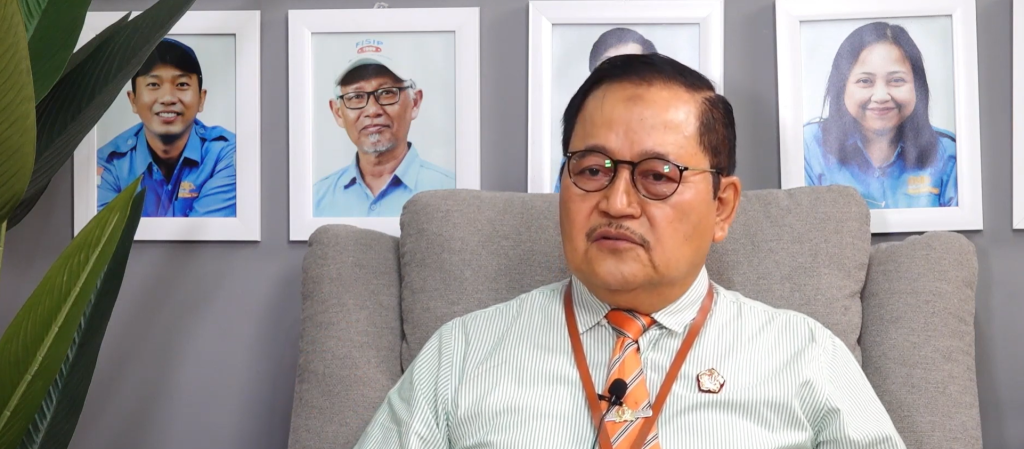
Prof. Sri Puryono added that sound environmental governance must balance three dimensions at once: ecological restoration in upstream areas, economic realities for communities who cannot simply be relocated, and social factors such as industrial zones and jobs downstream. He pointed to the recent flooding in Kudus and Demak — where entire neighborhoods were submerged — as a consequence of ignoring this balance, and encouraged the public to begin with everyday actions such as building household infiltration wells, disposing of waste properly, and planting trees, including mangroves along vulnerable coastlines.
He also discussed Undip’s own initiative in the upstream Babon watershed, where the university manages a 100-hectare Special-Purpose Forest Area (KHDTK) established in 2021. He described the site as a living field laboratory where environmental issues are tackled together with local communities, and which regularly hosts university students, including those on community service (KKN) placements, to learn hands-on watershed management.
Closing the discussion, Prof. Sri Puryono introduced a “Green Leadership Certificate” concept for students, noting its growing value as green industries place more weight on environmental credentials when hiring. He tied its success to a six-pillar collaborative model he calls Hexa-Helix — Academia, Business, Government, Community, Media, and Financial support (quality/funding) — arguing that when all six pillars function together, there is little reason environmental and SDGs targets cannot be met.
The episode reinforced a consistent message: achieving the SDGs in Central Java’s coastal regions depends less on isolated technical fixes and more on sustained, cross-sector collaboration between government, academia, business, media, and local communities — from the household level up to provincial policy.