

Semarang, 26 June 2025 — As part of efforts to implement sustainable waste management and promote circular economy principles on campus, students from the 2025 Thematic Community Service Program (KKN-T) SDGs Universitas Diponegoro organized TPST Day at the UPT K3L UNDIP area in Tembalang. The event marked both the highlight and closing ceremony of the KKN-T program, which ran from April 26 to June 26, 2025.
Ten student groups from various faculties actively contributed to the development of the Universitas Diponegoro Circular Campus Studio (UCCS). Over the course of two months, students initiated innovative waste processing projects, including composting dry leaves, producing paving blocks from plastic waste, increasing the production of liquid smoke from organic waste, and utilizing solar panels for agricultural irrigation. In addition, they cultivated vegetables using self-produced organic liquid fertilizer—demonstrating the synergy between waste management and food security.

The TPST Day event was attended by Prof. Dr. Ir. Hadiyanto, Director of Reputation, Partnership, and Global Connectivity at UNDIP, and Dr. Bina Kurniawan, S.KM., M.Kes., Head of UPT K3L UNDIP. During the event, two innovative programs were officially launched: SIGAP and HERO.
SIGAP (Sistem Informasi K3L Terpadu), introduced by Ir. M. Arfan, S.Kom., M.Eng., is an integrated digital reporting system designed for occupational safety and health within the UNDIP environment. Key features include an emergency button that immediately sends alerts and locations to administrators, incident reports with photo documentation, and real-time monitoring of emergency response developments. Meanwhile, HERO is a grassroots initiative aimed at strengthening community involvement in sustaining campus environmental efforts through hands-on actions.
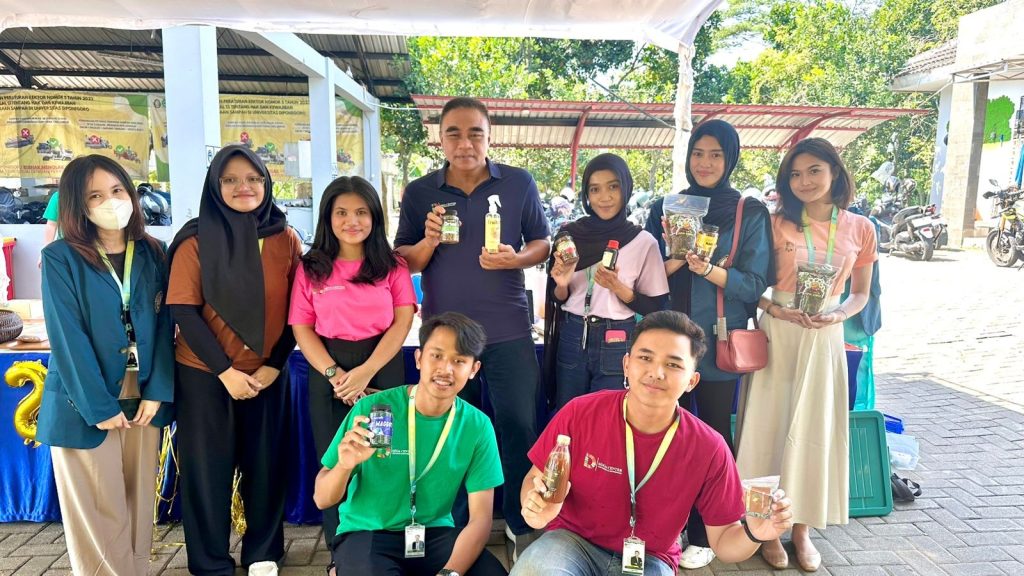
TPST Day served not only as a moment to celebrate students’ hard work, but also as a milestone in strengthening a more innovative, sustainable, and digitally integrated environmental management system on campus. It is hoped that these initiatives will propel Universitas Diponegoro toward becoming a zero-waste institution and foster a strong culture of safety and environmental awareness among the academic community.
 English
  Indonesian